Welcome to the Mathematical World!
Omar Khayyam
Mathematician, Astronomer, and Poet of Persia
Omar Khayyam (1048 – 1131 CE) was a Persian polymath renowned for his profound contributions to mathematics, astronomy, philosophy, and literature. Born in Nishapur in northeastern Iran during the Seljuk Empire, he was a prominent figure of the Islamic Golden Age. Though widely celebrated for his poetry, particularly the Rubáiyát, Khayyam was equally, if not more, influential in the mathematical and scientific domains of his time.
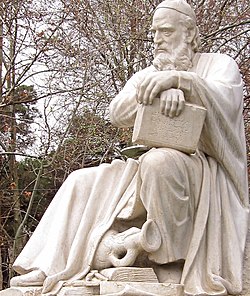
In mathematics, Khayyam made notable progress in algebra, especially in solving cubic equations. He classified cubic equations into several types and solved them geometrically using conic sections — a major advancement in algebraic theory. For example, he addressed equations of the form:
- \(x^{3}+ax=b\)
- \(x^{3}+b=ax\)
- \(y=x^{2}/a\)
While Khayyam did not provide general algebraic solutions to cubics (which would come centuries later), his geometric solutions using the intersection of a parabola and a circle were far ahead of his time and showcased his deep understanding of classical Greek geometry and Islamic algebra.
Khayyam also criticized the idea of solving all cubic equations using only arithmetic and algebraic methods, asserting the necessity of geometric constructions. His algebraic work, especially the treatise “Treatise on Demonstration of Problems of Algebra”, laid an important foundation for the later development of algebraic geometry.
In astronomy, Khayyam led a team of scientists at the Isfahan observatory under Seljuk Sultan Malik Shah, where he developed a remarkably accurate calendar. The Jalali calendar, introduced in 1079 CE, was a solar calendar with a calculation of the year’s length as 365.2424 days — more accurate than the Gregorian calendar used today.
His astronomical tables included improved values for the solar year and planetary positions. The calendar he devised remained in use in Persia for centuries and forms the basis of the modern Iranian calendar.
Aside from science, Khayyam is world-famous for his Rubáiyát — a collection of quatrains (four-line poems) expressing philosophical, existential, and sometimes mystical themes. These verses, though originally less known in his time, gained widespread popularity in the West due to Edward FitzGerald’s 19th-century translation.
- Developed geometric solutions to cubic equations using conic sections
- Contributed significantly to the field of algebraic geometry
- Created the Jalali calendar — highly accurate for its time
- Led major astronomical reforms under the Seljuk Empire
Omar Khayyam's legacy is a rare fusion of poetic brilliance and scientific precision. His name remains immortal both in the verses that contemplate the fleeting nature of existence and in the mathematical formulas that seek eternal truths.

All rights reserved by the Mathematical Unity
Contact: +8801400044645
Email: mathematicalhorse1453@gmail.com
Our Discord Server: Mathematical Unity [Ulus Riyadiyat]